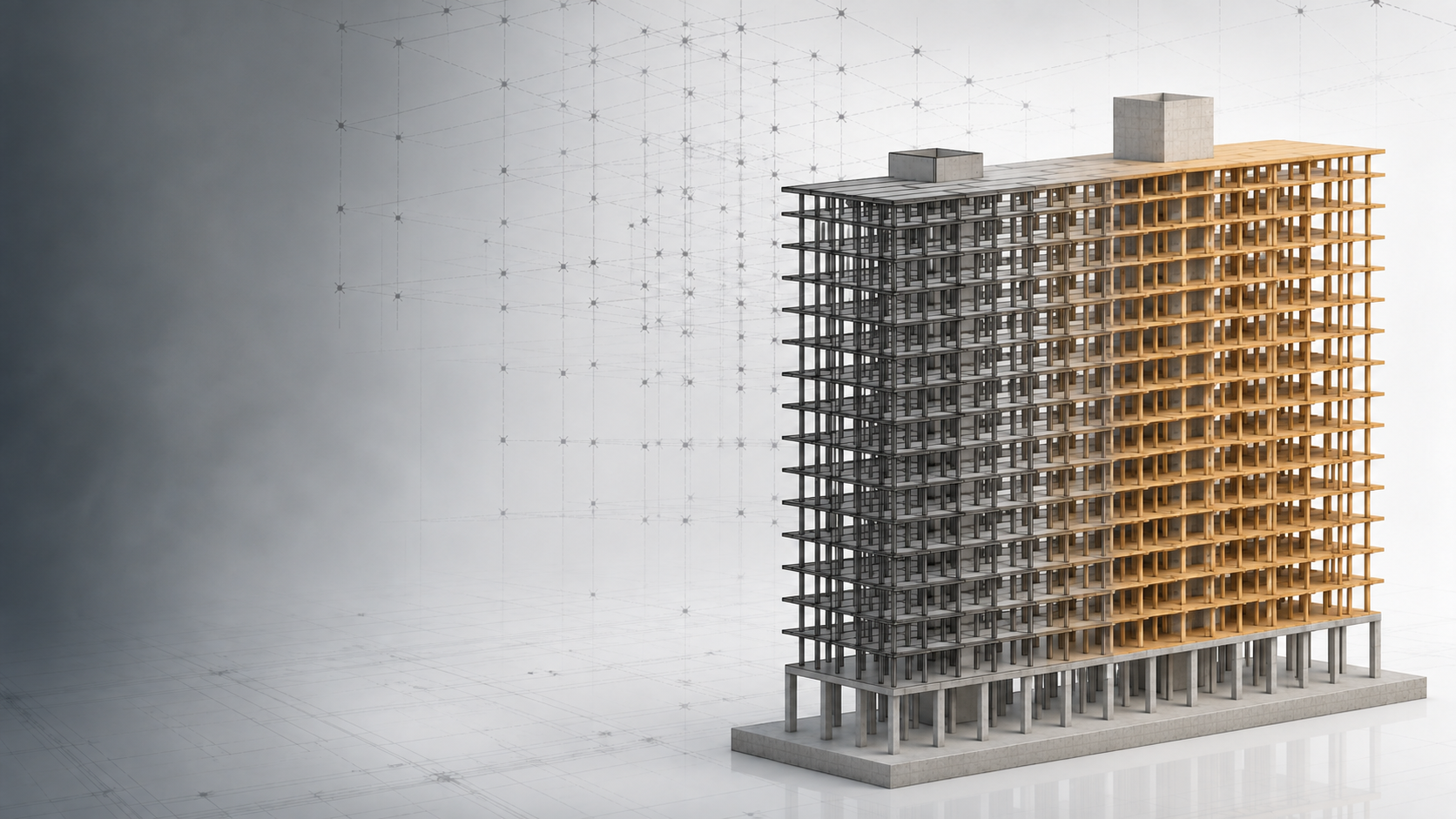
Sound familiar?
The work is there. The job keeps getting stuck between people.
- Bids slip. Reviewing the RFQ and pricing the job takes longer than the client will wait.
- Nobody sees the whole job. Status lives in emails, spreadsheets and people's heads. Finding out where a job stands takes a meeting.
- Late changes ripple. One design change has to be chased by hand through the drawings, the shop and the site.
- The wrong revision gets cut. The shop and the CNC aren't always working from the current version.
- Problems surface at the crane. A wrong piece, a missing part or the wrong order gets found on site, where it costs the most.
- Know-how walks out the door. The rules live in a few people's heads, so new hires take months and retirements take the rules with them.
Check the Fit for Your Shop Pick the ones that sound like you, and see how I'd handle each one, with the recording that shows it working.
Every role on the job
Not a CAD tool. How the whole job runs.
Everyone reads and writes the same governed record in 3DEXPERIENCE. A change made once reaches the office, the shop and the site, and nobody has to ask which version is current.
-
Owner & leadership
Every job's status, schedule and open issues in one place, and the capacity to bid more work without adding headcount.
See the whole job, RFQ to sign-off → -
Project managers
The plan sits next to the documents and models it refers to: phases, gates, tasks and owners, not in a separate scheduling tool.
Recording: AI project management → -
Architect & client
The RFQ, RFIs and every revision are tracked in one place. They review the model in a web browser and sign off on the same record the shop builds from.
Recording: RFQ review and RFI → -
Design
The architect's IFC or STEP model comes in once as structured objects instead of being redrawn, so design intent carries straight through to manufacturing.
Recording: Rhino STEP to IFC → -
Engineering
Models are generated from the spec with your rules. Engineers review and approve instead of drawing, and a change made once flows through.
Recording: spec to CATIA model → -
Production manager
Only released revisions reach production, so you can see what's ready to cut, what's staged and what's still in engineering.
3D scene: staging yard → -
Shop floor
Every cut comes from the current released revision. Each blank is QR-marked, and the connector fit is checked one part at a time.
3D scene: CNC and pre-assembly → -
Site team
The install sequence comes from the model, floor by floor, so deliveries and lifts are planned from the same record the shop built from.
Recording: the install sequence → -
Erection crew
Scan each piece's QR before it goes on the hook. The phone checks it against the install sequence, so the right piece goes up in the right order.
3D scene: erection →
What changes
One job, one record, from the RFQ to the site.
Your architect works in BIM. Your engineering and shop run on CAD, spreadsheets and ERP. Today people re-key the job at every hand-off. Here, one governed record carries it from start to finish. When the spec changes, the model, the shop data and the install sequence follow.
-
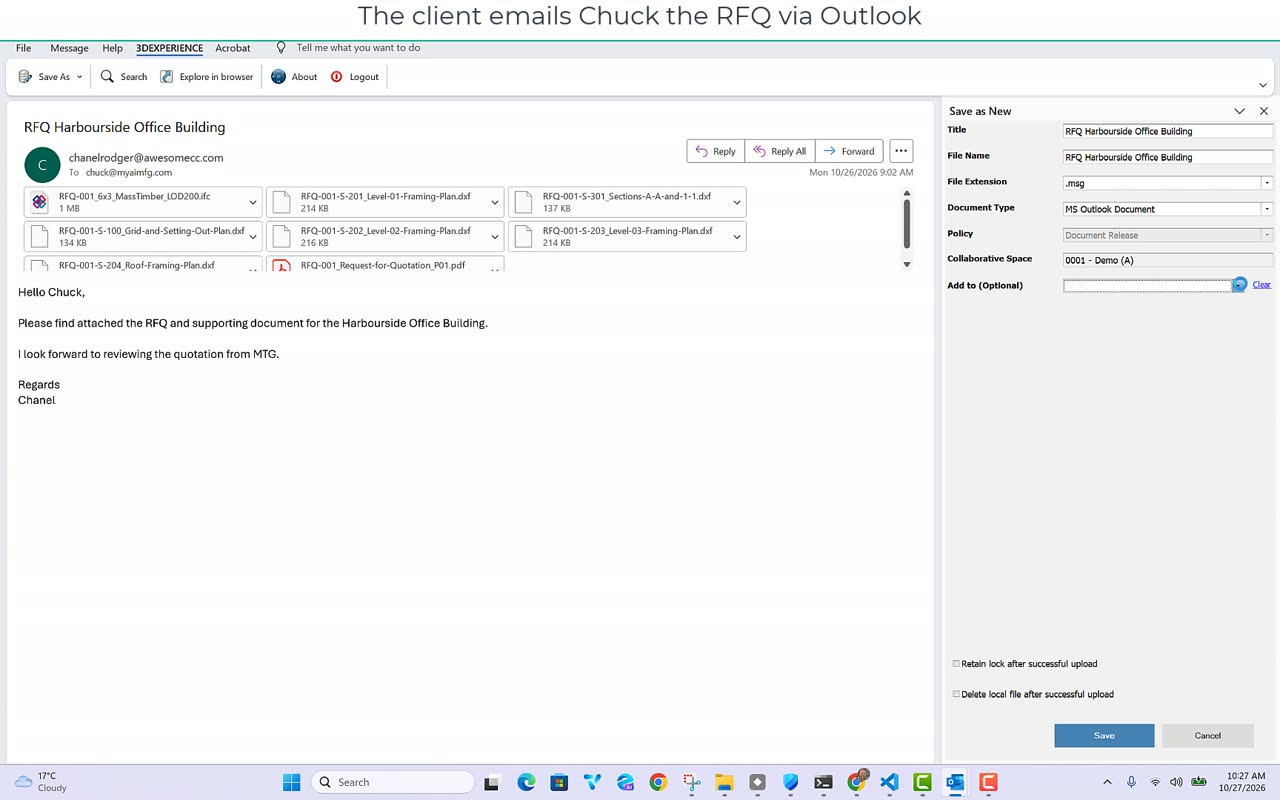 01 · RFQ in
The RFQ is captured once.
The attachments go straight into document management with revisions. The review and RFI are built from them.
-
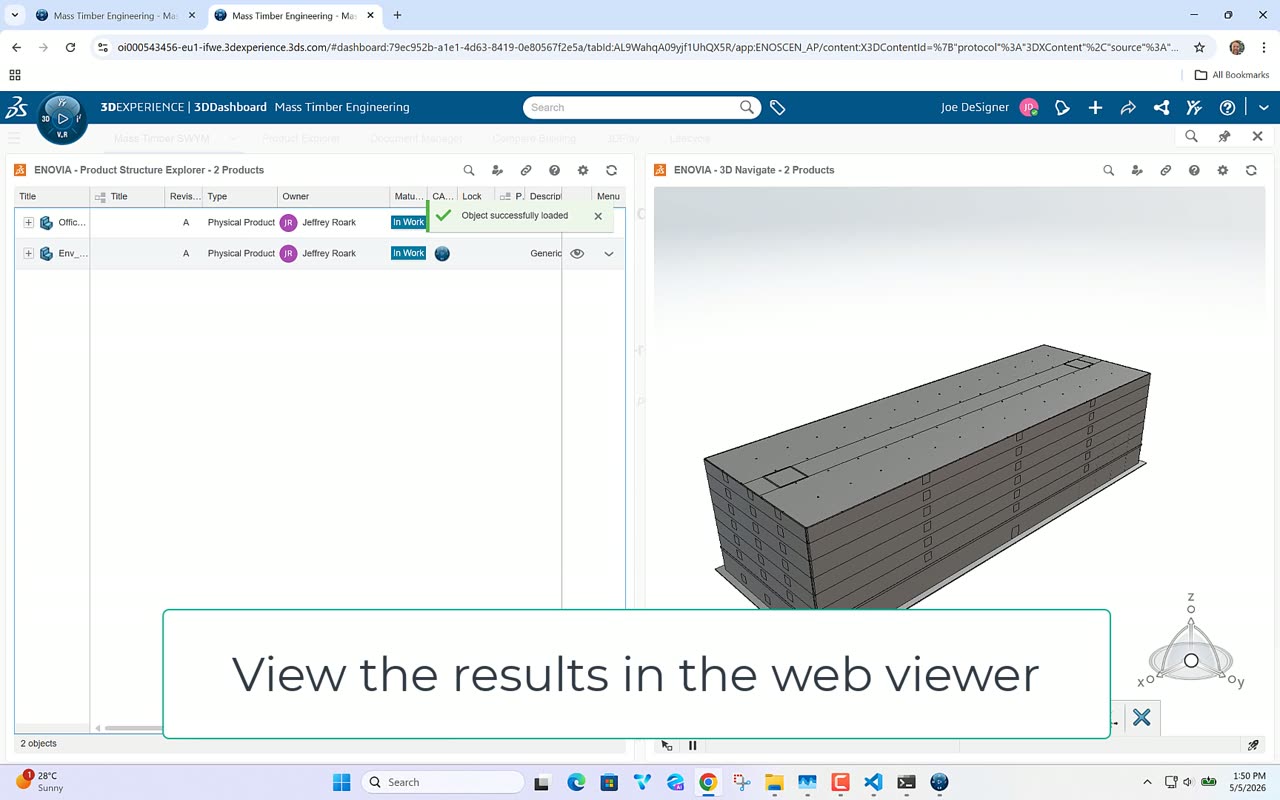 02 · Spec to model
The model builds itself from the spec.
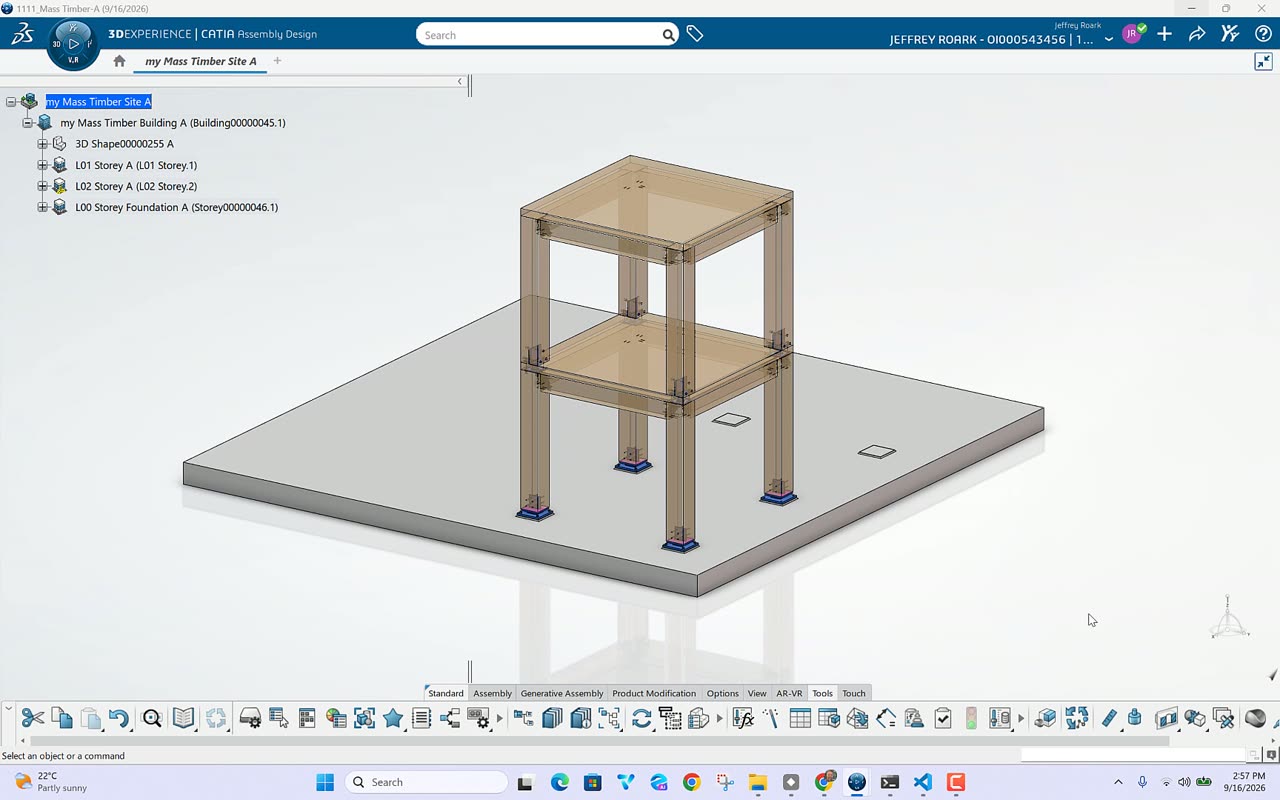
Lock the spec and an AI agent generates the structure in CATIA using your rules. Your engineer reviews it instead of drawing it.
-
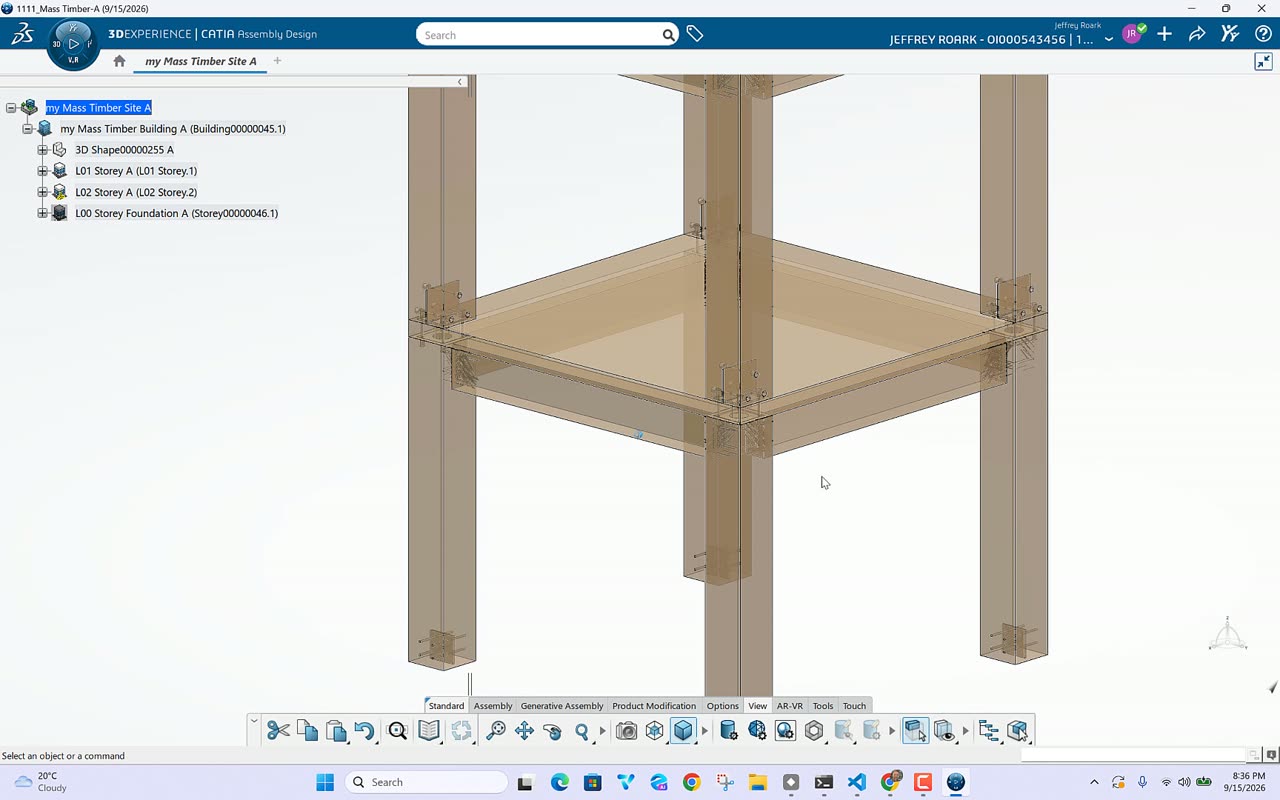 03 · Release to the shop
The shop cuts the right revision.
The released model drives the staging yard and CNC data, so there's no question which version is current.
-
 04 · Install
The site follows the same sequence.
The crew scans each piece's QR, and the phone checks it against the install order before it's lifted.
In the current mass timber engagement, a spec revision that used to mean a modeling effort now takes minutes of agent work, with an engineer reviewing the output rather than producing it. See all 12 recordings →
The first question everyone asks
Do I need 3DEXPERIENCE?
The automation runs on Dassault Systèmes 3DEXPERIENCE and CATIA. That platform holds the single governed record, and it's why changes stay traceable from the RFQ to the site.
Already on it? We start from your tenant and the data you already have.
Not yet? Take the free platform tour first, using your own data. Then Dassault Systèmes offers a very low-cost 90-day trial of the platform. You choose how many people to fund, and the data is yours at the end, whatever you decide.
Who runs it on your side? One lead person as the 3DEXPERIENCE admin. That can be an engineer; it doesn't need to be IT.
I'm independent, not a reseller, so you'll get a straight answer on whether it's worth it for a shop your size.
How we work together
Small steps. You decide after each one.
No step commits you to the next. The first two are free, and you see results on your own work before you sign up for anything bigger.
-
Step 1 Free
Intro call & fit check
30 minutes on your work, your bottleneck and your tools. You'll get a plain answer on whether there's a fit, and if there isn't, I'll say so.
You leave with: a clear yes or no, and the step I'd start with.
-
Step 2 Free
3DEXPERIENCE platform tour
A live walk-through on a working tenant using your own data. Bring an RFQ, a drawing set or a model, and see how it would move from RFQ to shop to site. Bring the people who run the job: the owner, a project manager, an engineer and your production lead.
You leave with: your own work seen on the platform, and a clear idea of what a proof of concept would cover.
-
Step 3 Paid · 2 weeks–90 days
Proof of concept
One work package from one of your real jobs, run on the 90-day trial. The scope and success criteria are agreed before we start.
- Licenses: Dassault's very low-cost 90-day trial, for the people you choose to fund
- My time: $1,500 per day, only on the days you need me
You leave with: measured before-and-after results on your own work, and the data stays yours.
-
Step 4 Paid · phased
Implementation
Roll it out to your projects in phases, train your lead admin and your team to run it, and get your rules and automation handed over with documentation.
You leave with: a system your team runs, with me available for support as you grow.
Who you'll work with
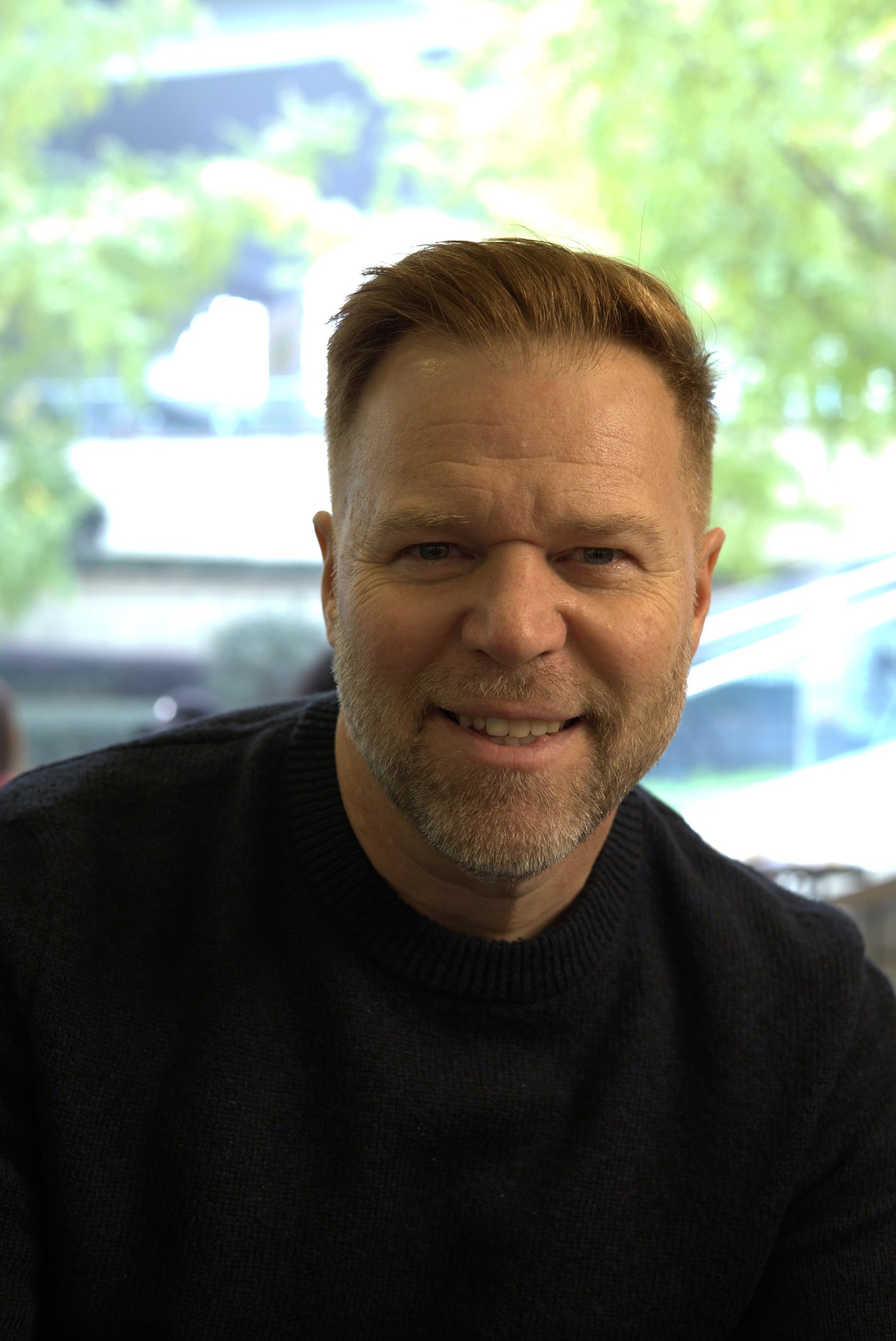
Jeffrey Roark. 30 years in CATIA and 3DEXPERIENCE.
I automated mass timber digital twins at Lendlease Digital, from quoting through manufacturing-ready 2D and 3D data, and built facade and light gauge steel framing automation with KREOD. Most recently I led facade engineering and manufacturing automation for a European facade manufacturer. Before that I spent 28 years at an automotive Tier 1 supplier, ending by leading design automation for 1,000 engineers. Dassault Systèmes CATIA Champion, 2020.
Every conversation is with me. There's no sales team and no hand-off.
Start with a 30-minute conversation.
Tell me what you build and where the engineering hours go. I'll tell you plainly whether this is a fit.
Book a Call